How plants build organs they were never born with
As a plant developmental biologist, I investigate how plants build specialised organs that underpin symbiotic interactions, including nodules and haustoria. My work combines histology, spatial transcriptomics, and gene network analysis to reveal the principles of organogenesis. Ultimately, I aim to translate these insights into strategies that strengthen crop resilience and promote sustainable agriculture.
At the Donald Danforth Plant Science Center I work with President Giles Oldroyd, using spatial transcriptomics and genomics approaches to uncover the developmental and molecular mechanisms underlying nodule formation in legumes and haustorium development in parasitic plants.
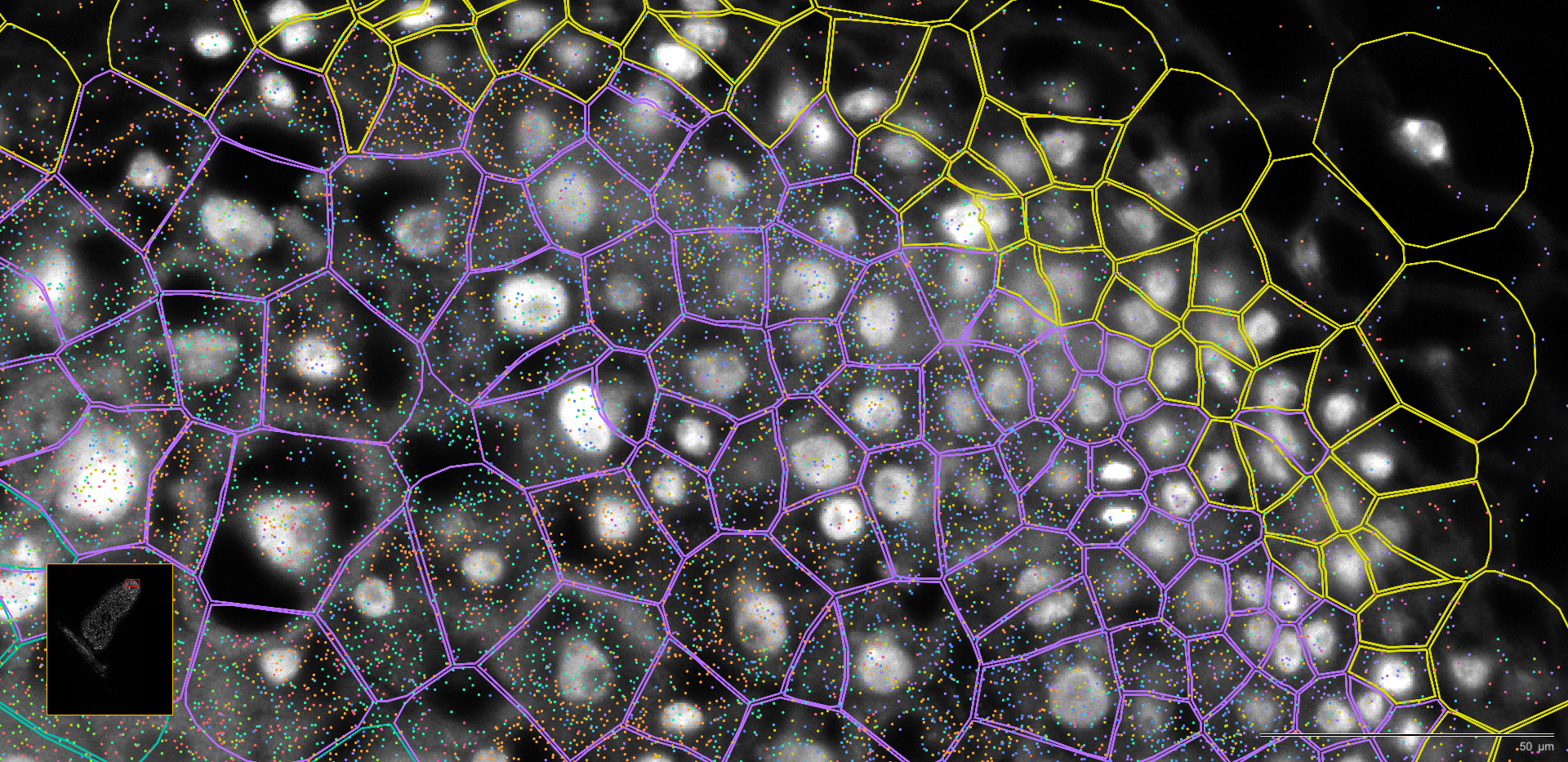
built for plant tissue
of Medicago nodules
The root nodule
Inside a nodule, slice by slice
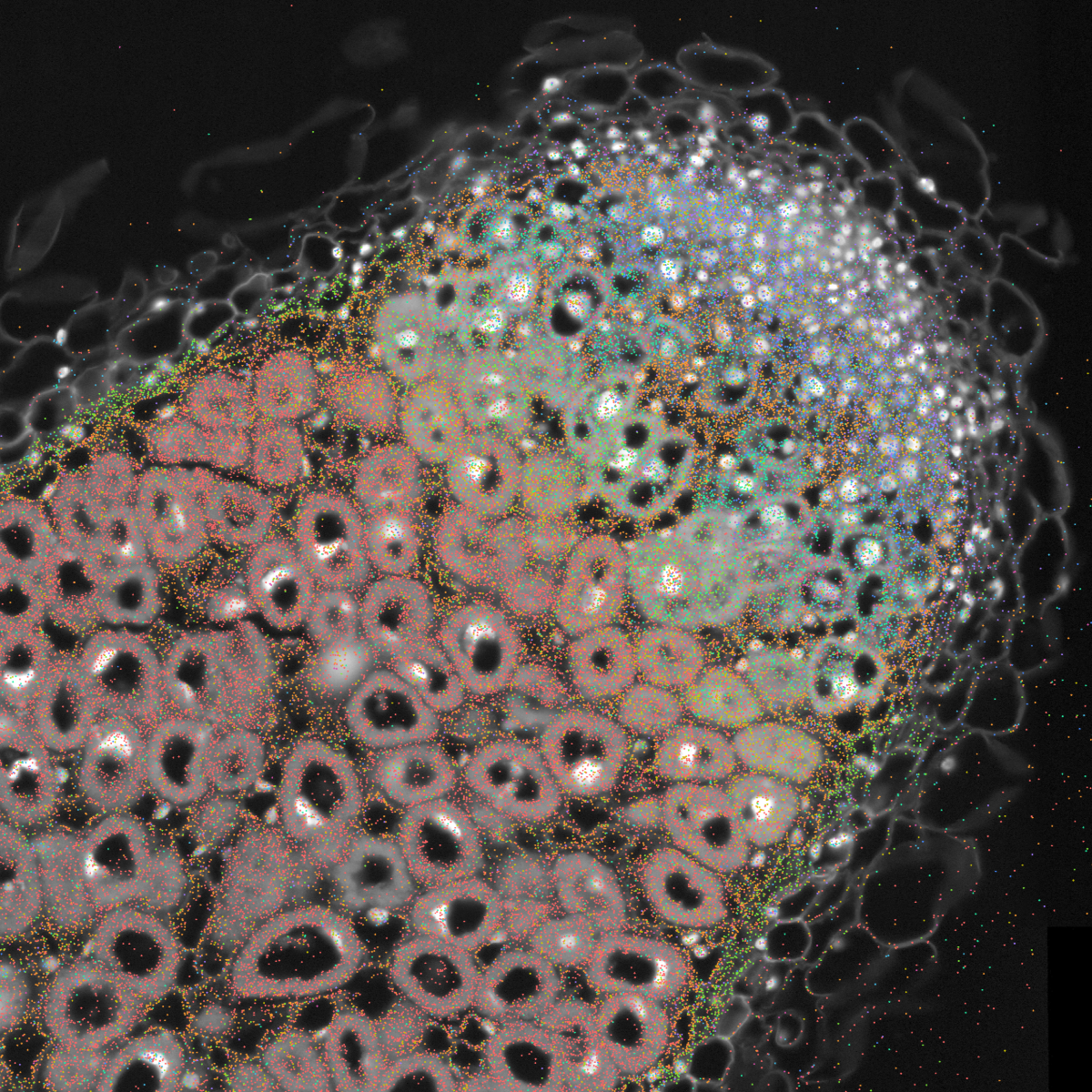
A single thin section shows only one plane of a nodule. By imaging hundreds of serial sections and stacking them back together, we can see the whole organ — how its zones are arranged and how the vasculature curves around them.
No stains or labels are needed: the tissue's own natural glow marks the bacteria-filled cells and the cell walls of the vascular strands.
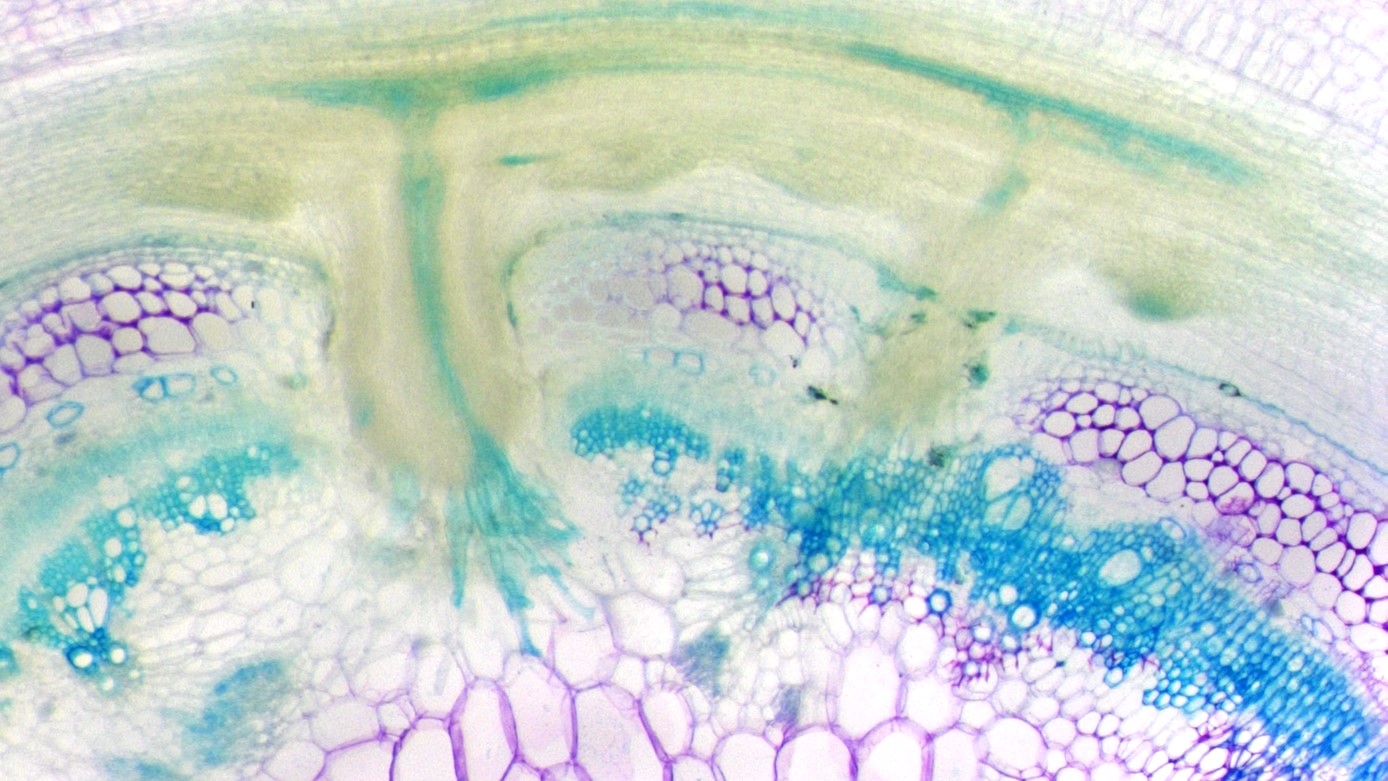
The haustorium
Searching and coiling
A dodder seedling has no roots and only a few days to find a host. Its shoot tip sweeps in slow circles to search, then wraps tightly around the stem it finds — the first step before haustoria form. This time-lapse follows Cuscuta on two hosts, tomato and Nicotiana benthamiana.
From commensalism to parasitism to mutualism
Donald Danforth Plant Science Center
My interest in plant symbiosis is rooted in my academic study. From commensalism to parasitism, and then to mutualism, I have always been fascinated by how plants sense other organisms and establish a tight relationship with them.
My exploration began in 2009, when I joined Dr. Gwo-Ing Liao's lab at National Cheng Kung University to study cecidology. My undergraduate thesis investigated the morphological development of commensalistic insect galls. The same lab worked on the floral structure of the parasitic plant Cuscuta — which caught my interest and shaped the direction of everything that followed.
In 2012 I began my master's research in Dr. Shih-Tong Jeng's lab at National Taiwan University, working on wound-responsive microRNAs in sweet potato. Afterwards I joined Academia Sinica as a research assistant, studying the regulatory mechanisms of Kranz anatomy development in maize.
Having discovered that Dr. Neelima Sinha's group was using RNA interference as a biological control against parasitic plants, I moved to the United States and began my PhD at UC Davis in 2015. My doctoral research focused on haustorium organogenesis in the stem parasite Cuscuta campestris and the host–parasite interaction between Cuscuta and tomato. I received my PhD in Plant Biology in 2021.
I then moved to the UK to join Giles Oldroyd's research group at the Crop Science Centre, University of Cambridge, as a postdoctoral research associate, working on engineering nodule organogenesis in cereals — moving from parasitism to mutualism, and from a parasite's haustorium to a legume's nodule.
Today I am a Senior Research Scientist at the Donald Danforth Plant Science Center in St. Louis, continuing in the Oldroyd group. I use spatial transcriptomics and advanced genomics to resolve the developmental and molecular logic of nodule formation in legumes and haustorium development in parasitic plants — with the long-term aim of translating that logic into more resilient crops and more sustainable agriculture.
MS, Plant Biology — NTU
BS, Life Sciences — NCKU
Cuscuta campestris
Tomato · Maize · Sweet potato
painting, and baking
Where the work has taken me
A path through plant development
{{g.label}}
{{g.count}}Peer review
2020 – present
From haustoria to nodules
Decoding plant symbiosis-induced organogenesis.
Highlighted publications
click a card for the abstract{{p.title}}
{{p.abstract}}
Complete list
click a card for the full citation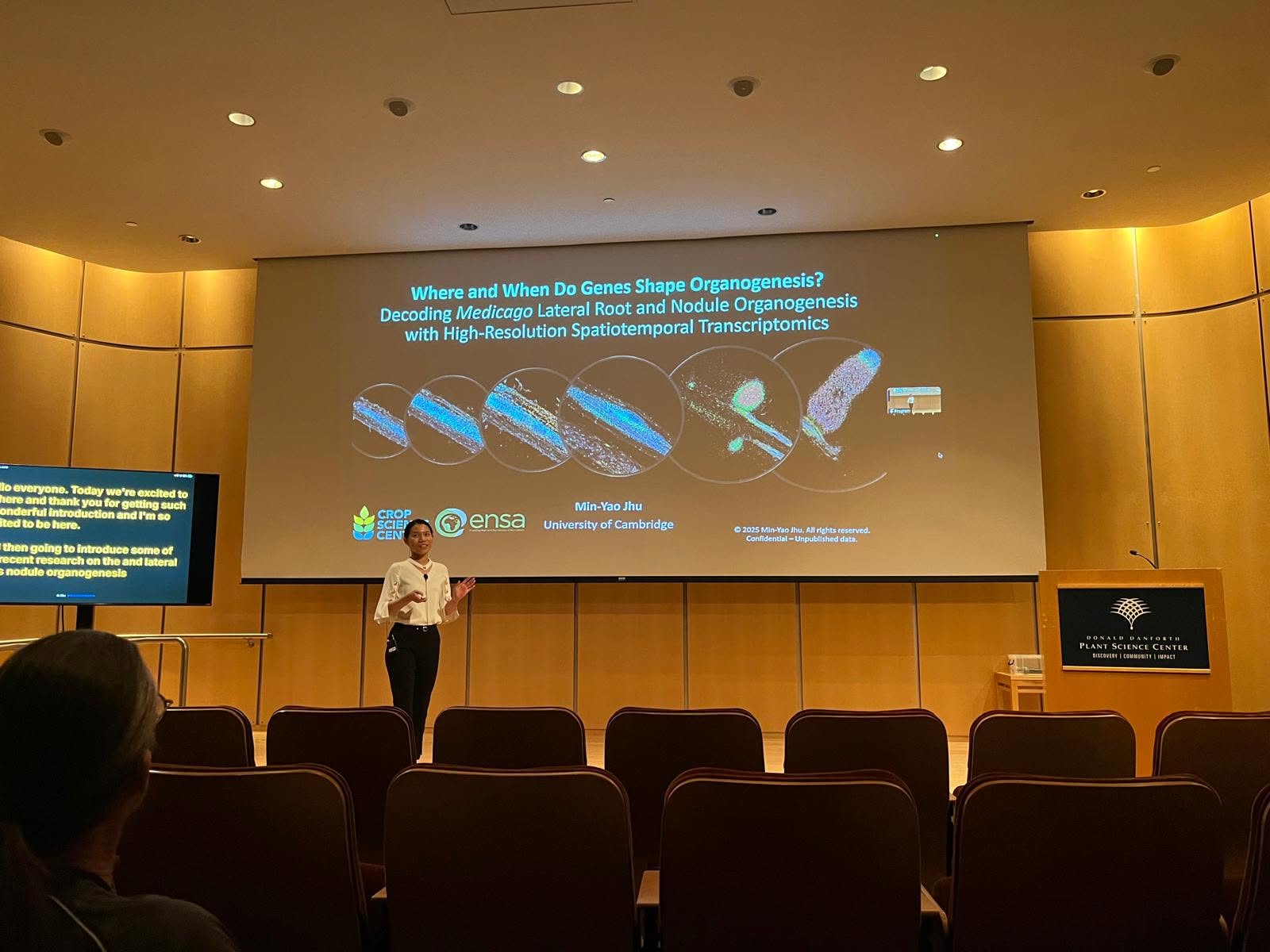
{{g.label}}
{{g.count}}Recorded lectures and seminars
Teaching
Making science engaging, inclusive, and accessible for all learners.
Recent
Photograph gallery
Science, art, and the friendships made along the way.